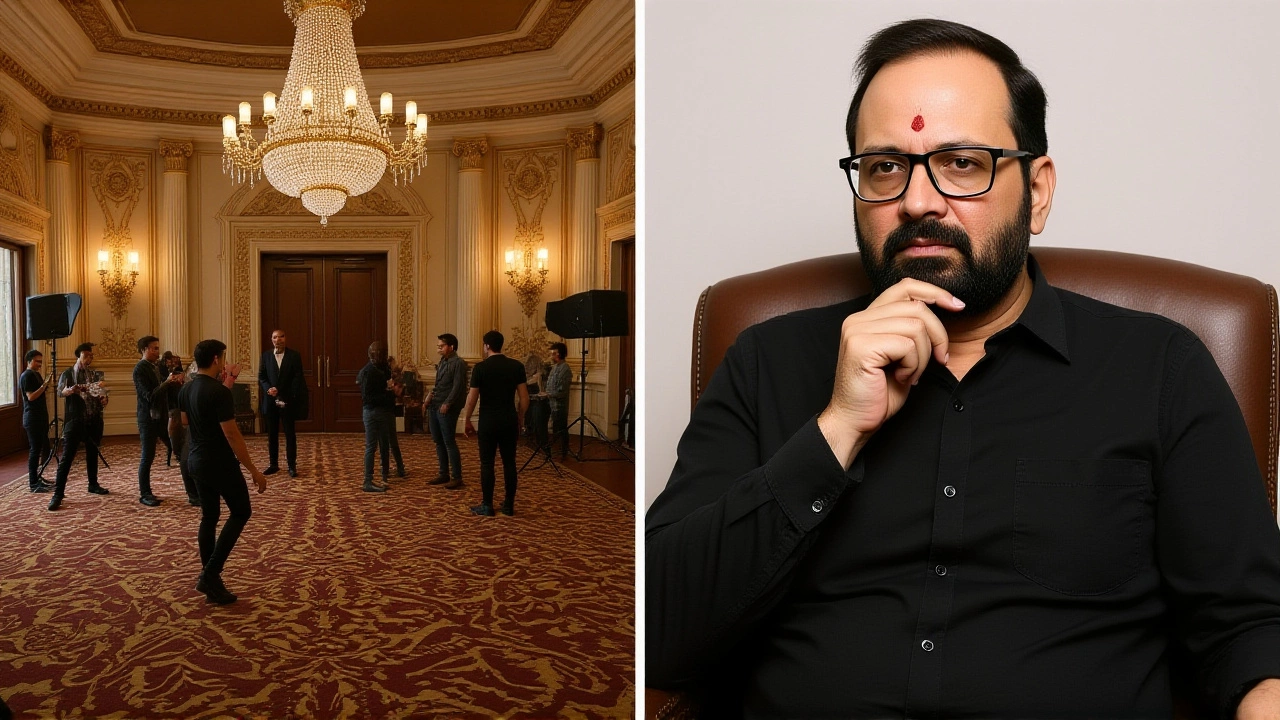
When BN Tiwari, President of Federation of Western India Cine Employees (FWICE), issued a stark warning last week, the echoes were felt far beyond the soundstages of Mumbai. He didn't mince words: if the plight of film workers isn’t addressed immediately, the entire Hindi film industry could grind to a halt. It’s not just a threat; it’s a cry for help from the backbone of an industry worth billions.
The warning came during a period of heightened anxiety in Mumbai, where thousands of technicians, crew members, and support staff are struggling with delayed payments, job insecurity, and a lack of basic welfare measures. Tiwari’s statement wasn’t made in isolation—it reflects a growing unrest that has been simmering for months among those who work behind the camera, often unseen but indispensable.
The Warning That Shook the Industry
Here’s the thing: Bollywood isn’t just about stars and red carpets. It’s built on the sweat and toil of over 50,000 direct employees and countless indirect workers—from electricians and carpenters to makeup artists and drivers. According to Tiwari, many of these individuals are now facing severe financial distress. “If things continue like this, one day this film industry will shut down completely,” he said. “People connected to it will be forced onto the streets.”
That quote alone should send shivers down the spine of anyone who loves Indian cinema. But wait—this isn’t the first time such warnings have been raised. In recent years, similar concerns have surfaced regarding unpaid dues, informal employment structures, and the impact of digital disruption on traditional roles. Yet, something feels different this time. The tone is sharper. The stakes feel higher.
Who Is Most Affected?
Tiwari specifically pointed out that the hardest hit are those “who work behind the camera all day.” These are the technical and backend staff—the gaffers, grip operators, costume assistants, location managers—who rarely make headlines but keep productions running smoothly. Unlike actors or directors, they don’t have personal brands or social media followings to leverage when seeking justice.
Oddly enough, while streaming platforms and OTT services boom, the people enabling content creation are left in limbo. A new trend toward shorter production cycles and lower budgets means fewer stable jobs and more gig-style contracts. For someone earning ₹15,000–₹25,000 per month inconsistently, that’s not flexibility—it’s survival mode.
Historical Context: When Workers Last Stood Up
This isn’t unprecedented. Back in 2018, there was a wave of protests by cinematographers and editors demanding better payment terms. More recently, in early 2023, several unit managers walked off sets due to non-payment of salaries. Each instance highlighted systemic vulnerabilities—but none led to structural reform.
What makes today’s situation unique is the scale of dissatisfaction. With inflation rising at 6.7% annually (as per RBI data from Q2 2024), even modest wages lose value quickly. Add in the post-pandemic recovery lag, and you’ve got a perfect storm brewing beneath the glittering surface of Bollywood.

Industry Response So Far
Producers’ bodies like the Association of Film Chambers (AFC) and Film and Television Institute of India (FTII)-linked guilds have acknowledged the issues but stop short of committing to concrete action. One producer anonymously told reporters, “We’re doing our best under tight margins. Blaming us doesn’t solve anything.”
But here’s the twist: blaming isn’t the goal. Accountability is. And right now, accountability seems missing. No government body has stepped forward with a comprehensive review of labor conditions in the entertainment sector. The Ministry of Information & Broadcasting hasn’t issued any policy updates since 2021.
Broader Implications Beyond Cinema
If Bollywood collapses—or even slows significantly—the ripple effects would extend far beyond entertainment. Tourism in Maharashtra relies heavily on film-related activity. Hotels, transport services, catering businesses—all tied into the ecosystem. An estimated ₹12,000 crore flows through ancillary sectors every year thanks to film shoots across India.
Moreover, cultural export suffers. Bollywood contributes significantly to soft power diplomacy abroad. Countries like Russia, UAE, and Southeast Asian nations regularly host Indian film festivals partly because of consistent output. A slowdown affects not just domestic livelihoods but international perception too.

What’s Next? Signs to Watch
In the coming weeks, look for three key developments:
- Whether FWICE organizes coordinated strikes or public demonstrations
- If major studios announce wage revisions or benefit packages
- Any legislative movement introducing formal recognition for freelance creatives
Also watch how streaming giants respond. Netflix India, Amazon Prime Video, and Disney+ Hotstar employ hundreds indirectly via production houses. Their stance could tip the balance between resolution and escalation.
Background Deep Dive: How Did We Get Here?
Bollywood’s workforce structure evolved organically over decades. Unlike Hollywood’s unionized model, India’s system remained largely informal until recently. Even after the Entertainment (Cinematograph) Rules were updated in 2020, enforcement remains weak. Many workers operate without written contracts, leaving them vulnerable to exploitation.
Compounding the issue is technological change. Automation reduces need for certain roles. Virtual sets replace physical locations. AI tools assist editing processes. While efficiency improves, human capital gets sidelined unless retrained—and training programs remain scarce.
Frequently Asked Questions
Why is FWICE issuing this warning now?
FWICE President BN Tiwari issued the warning amid worsening economic conditions for film workers, including delayed payments, irregular income, and lack of social security. Recent surveys indicate nearly 40% of crew members haven’t received full wages in the past six months, prompting urgent intervention.
Which groups within Bollywood are most affected?
Technical staff working behind the camera—such as lighting technicians, sound engineers, makeup artists, and location coordinators—are disproportionately impacted. They typically earn between ₹15,000–₹30,000 monthly, often without fixed schedules or benefits, making them highly susceptible to market fluctuations.
Has anything like this happened before?
Yes, smaller-scale protests occurred in 2018 and 2023 involving cinematographers and unit managers demanding timely payments. However, no large-scale shutdown has ever taken place. This marks the first time leadership has explicitly warned of total industry collapse unless reforms occur.
What can producers and policymakers do to prevent a crisis?
Immediate steps include enforcing standardized pay scales, introducing mandatory insurance coverage, and creating dispute resolution mechanisms. Long-term solutions involve integrating freelance creatives into national labor frameworks and investing in skill development programs aligned with evolving tech demands.
Could other regional industries face similar threats?
Absolutely. Tamil Nadu’s Kollywood, Telugu Tollywood, and Malayalam Mollywood share comparable labor models. If unresolved, parallel movements may emerge. Already, Karnataka-based technicians have filed petitions citing identical grievances, suggesting a pan-Indian challenge rather than a localized one.